
The Day Marketing Stopped Feeling Like Advertising
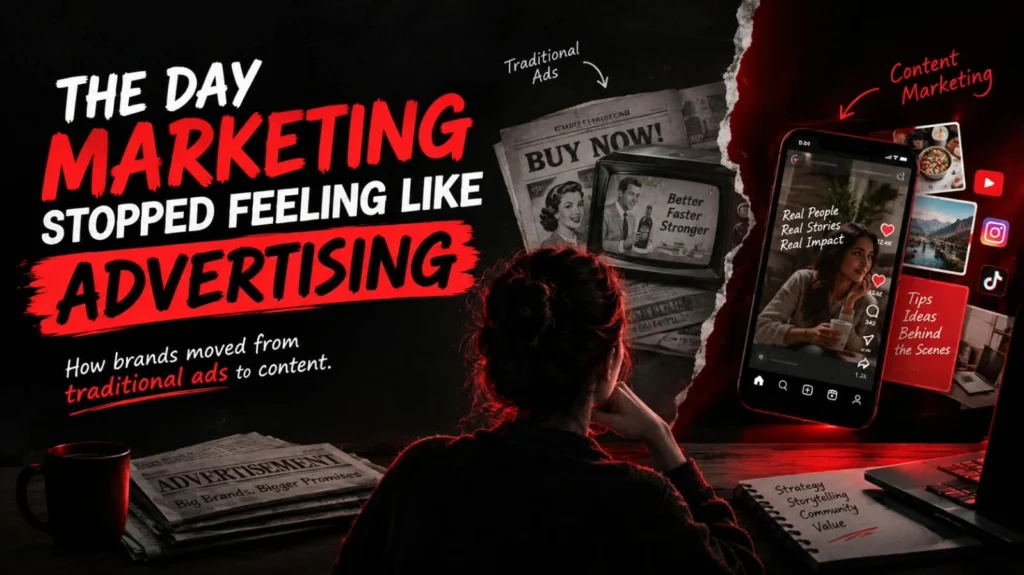
Marketing has always been about getting people to notice a product, service, or brand. But the way businesses communicate with customers has changed significantly. Traditional advertising often focuses on convincing people to buy. Modern marketing, however, is increasingly focused on creating conversations, building trust, and giving people a reason to connect with a brand.
This shift is especially visible online. Websites, social media pages, blogs, and digital campaigns are no longer simply places to promote products. They have become spaces where brands can communicate their values, share their stories, answer questions, and build relationships with their audiences.
The result is a simple but important change: marketing works better when it feels less like advertising and more like a genuine conversation.
When Marketing Becomes Too Promotional
A common approach to digital marketing is to focus heavily on selling. Websites may be filled with phrases such as “best quality,” “number one service,” or “contact us today.” Blog posts may be created simply to target keywords, while advertisements constantly encourage people to purchase something.
Although these methods can attract attention, they can also make a brand feel repetitive and impersonal.
People are exposed to countless advertisements every day. Because of this, they have become better at recognizing content that exists only to sell. When every sentence sounds like a sales pitch, audiences may lose interest before they even understand what the brand is actually offering.
The problem is not advertising itself. The problem begins when communication becomes entirely focused on selling rather than helping, informing, or connecting.
The Shift From Selling to Communicating
Modern digital marketing is gradually moving from a simple “buy this” approach toward a more conversational style.
Instead of repeatedly telling customers how good a product is, brands can explain why the product exists, what problem it solves, how it was created, and what makes the people behind it different.
This does not mean that businesses should stop promoting their products. It means that promotion becomes part of a larger communication strategy.
A brand can educate its audience through blog posts, answer questions through social media, explain its process through videos, share customer experiences, and talk about the challenges behind its journey.
When customers receive useful information instead of constant sales messages, the relationship with the brand can become stronger.
Why Authenticity Matters
Perfect-looking brands can sometimes feel distant.
Customers do not always want to see a business that claims everything is flawless. They often connect more easily with brands that communicate honestly about their experiences, challenges, mistakes, and values.
Authenticity gives a brand a personality.
For example, instead of simply saying that a business provides “the best quality service,” a website can explain how the service is delivered, what standards are followed, what challenges customers commonly face, and how the business handles those situations.
Specific experiences are usually more memorable than generic promotional statements.
This is why storytelling has become such an important part of content marketing.
Storytelling Makes Brands More Human
Storytelling allows businesses to communicate the “why” behind what they do.
A product page can explain more than features and prices. A brand can talk about why a product was created, what problem inspired it, or what the business learned while developing it.
The same principle applies to blog content.
Instead of writing an article simply because a particular keyword has search volume, businesses can create content that answers real questions and discusses situations their customers actually experience.
This makes the content more useful and easier to relate to.
Good storytelling does not require dramatic success stories. Even small details, honest observations, customer experiences, and lessons from mistakes can make content feel more human.
Advertising vs Storytelling
The difference between traditional promotional communication and storytelling can be seen in several ways.
When the focus is mainly on advertising
The communication often focuses on product features.
The language may sound similar to competitors.
The main goal is to generate clicks or immediate sales.
The content can feel disconnected from the people behind the brand.
When the focus includes storytelling
The communication explains the reason behind the brand.
The brand develops a recognizable voice.
Trust is built before asking for a purchase.
Customers get a clearer understanding of the people and values behind the business.
The purpose is not to eliminate advertising. Instead, storytelling gives advertising something more meaningful to communicate.
Content Should Sound Human
One of the easiest ways to make digital content feel more natural is to stop trying too hard to sound professional.
Professional communication does not have to be robotic.
A brand can remain respectful and informative while still using simple, warm, and understandable language.
Content should feel as though a real person is communicating with another real person.
This is particularly important for websites and blogs. When every paragraph uses complicated language and promotional phrases, readers may find it difficult to connect with the message.
Simple language can often communicate an idea more effectively.
Small Details Can Create a Big Difference
Humanising a brand does not always require a complete marketing transformation.
Small changes can make a significant difference.
A business can include a slightly informal sentence, explain a common mistake, share a lesson learned, or provide a realistic example. These details can make content feel less like a carefully constructed sales pitch.
Perfection is not always the strongest form of communication.
Online audiences have become familiar with polished advertisements and carefully designed promotional messages. Honest details can therefore make a brand feel more genuine.
The goal is not to deliberately make content look unprofessional. The goal is to make it feel real.
Websites Are More Than Digital Brochures
A business website is often treated as an online brochure. It lists services, describes products, displays contact information, and encourages visitors to make a purchase.
But a website can do much more than that.
It can answer customer questions, explain complicated topics, demonstrate expertise, introduce the people behind the business, share useful resources, and communicate the values of the brand.
A website that simply says “buy from us” gives visitors limited reasons to trust the business.
A website that explains, teaches, and communicates gives visitors more opportunities to understand the brand before making a decision.
This is particularly important for small businesses that may not have the same advertising budgets as larger companies.
Trust Before the Sale
One of the biggest advantages of humanised marketing is that it can build trust before a customer makes contact.
When people understand a brand, its approach, and the reasoning behind its products or services, conversations can become more informed.
Instead of approaching a business with only questions about price, customers may already understand what the business offers and why it is different.
This can make inquiries more meaningful and reduce the feeling that every interaction is simply a transaction.
Trust does not usually develop through one advertisement. It develops through consistent communication over time.
The Role of Blogs in Humanised Marketing
Blogs provide one of the best opportunities for brands to move away from constant promotion.
A useful blog does not need to mention the product in every paragraph.
It can answer common questions, explain industry changes, share practical information, discuss mistakes to avoid, or explore problems faced by customers.
For example, instead of writing a generic article about why a particular service is “the best,” a business can explain what customers should consider before choosing that service.
This approach provides value even before the reader becomes a customer.
When content consistently helps people, the brand gradually becomes associated with useful information rather than advertising alone.
Marketing Is Still About People
Digital marketing has become more advanced, but the basic principle remains simple: people connect with people.
Algorithms, advertisements, analytics, keywords, conversion rates, and targeting are important parts of digital marketing. However, behind every click is a person making a decision.
That person may be looking for information, comparing options, solving a problem, or simply trying to understand whether a brand can be trusted.
Marketing becomes more effective when businesses understand this human side of the customer journey.
Instead of asking only, “How can we get this person to buy?” marketers can also ask, “What does this person need to know?” or “How can we make this easier for them?”
That change in thinking can completely transform the way content is created.
The Bigger Change in Digital Marketing
The future of marketing is not necessarily about choosing between advertising and storytelling.
Both have their place.
Advertising can create awareness and reach new audiences. Storytelling can create connection and trust. Useful content can build authority. Customer experiences can provide social proof. Together, these elements can create a stronger marketing strategy.
The important change is that brands no longer have to communicate like companies constantly standing outside their own shop shouting for attention.
They can create content that informs, helps, entertains, explains, and connects.
Marketing becomes less about forcing attention and more about earning it.
A More Human Way to Market
The strongest brands are not always the ones making the loudest claims. They are often the ones that communicate clearly, show personality, provide value, and give customers a reason to trust them.
A business does not have to abandon advertising to become more human.
It simply needs to remember that every advertisement, blog post, website page, and social media post is ultimately being read or watched by a person.
When brands stop treating every interaction as an opportunity to sell and start treating it as an opportunity to communicate, marketing begins to feel different.